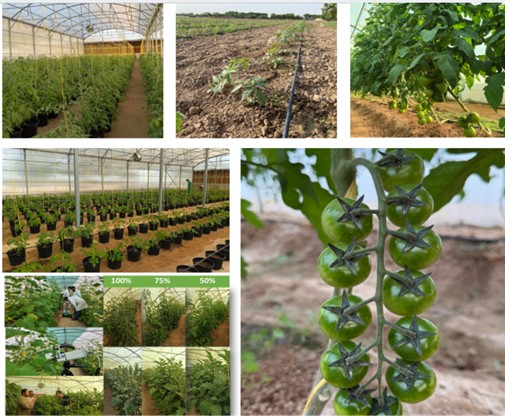
Despite growing interest and commendable efforts to boost local food production toward self-sufficiency, particularly in vegetables, significant challenges persist in the local supply chain. These include seed sourcing, resource use efficiency, nutritional quality, and product shelf life. Seeds are the foundation of sustainable agriculture, carrying the genetic potential for high yields, nutritional value, and resilience to climate change, disease, and pests, directly impacting food availability, affordability, and stability. However, vegetable producers in the country heavily rely on imported seeds, not specifically bred for local climates, even for some of the most sought-after crops, including tomatoes. In addition, there is no centralized platform for systematic evaluation of imported germplasm, nor a coordinated pre-breeding program to inform future crop improvement strategies in Qatar. Given its strategic importance, the ARS at QU is working towards establishing a local germplasm screening and vegetable breeding program to support a sustainable production system in the country. A key early focus is identifying vegetable varieties that are best adapted to local conditions, particularly those combining high yield with efficient water use. So far, we have evaluated more than 230 tomato genotypes including breeding lines, cultivars, and landraces, sourced from different international organizations. These genotypes were tested both under open field and controlled environments (tunnels and multispan greenhouses) for their yield performance and produce quality. Ultimately, this work lays the foundation for a national, evidence-driven framework to evaluate, select, and improve vegetable germplasm for resilience, productivity, and resource-use efficiency under Qatar’s diverse production environments.